
66
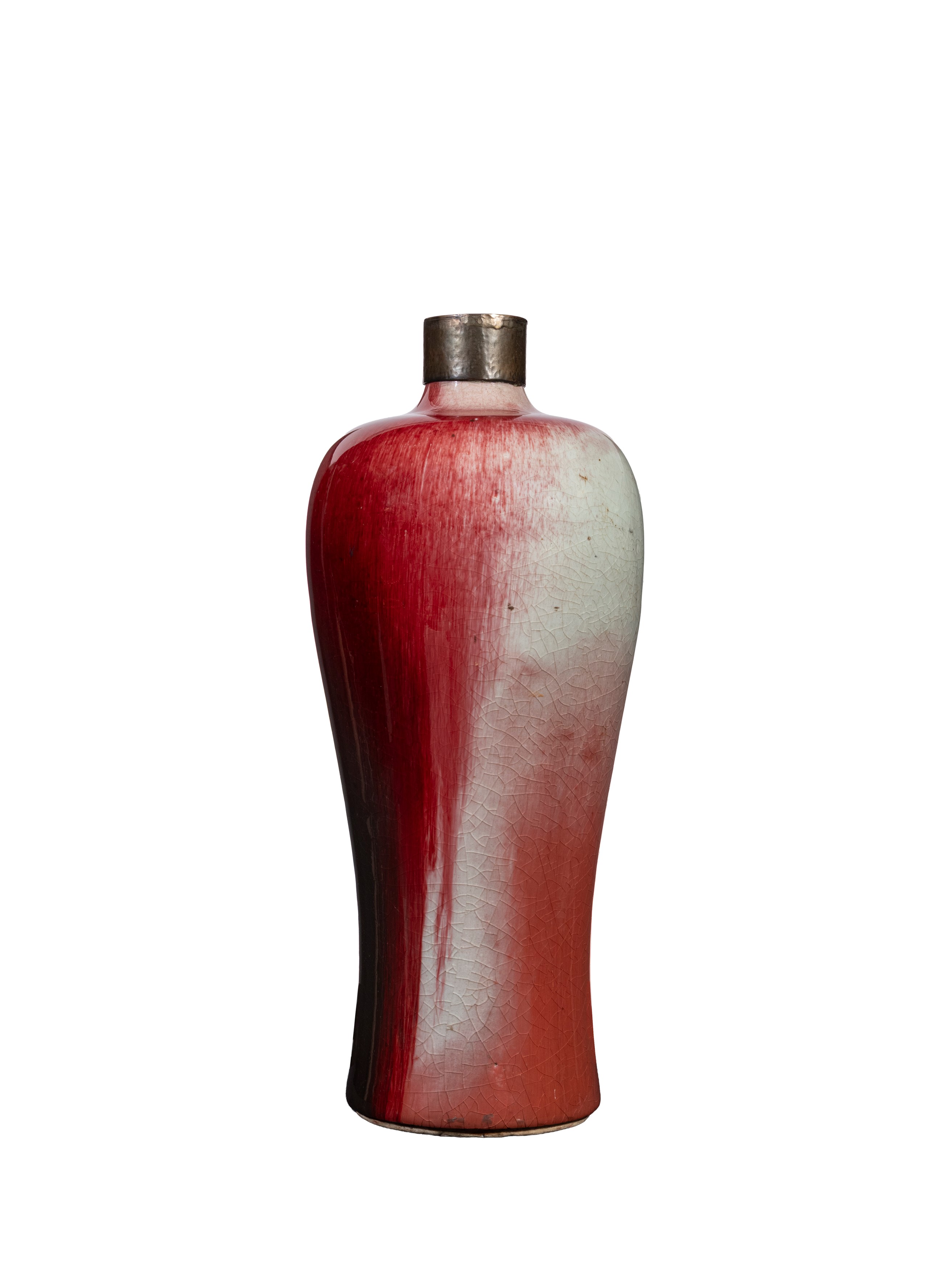
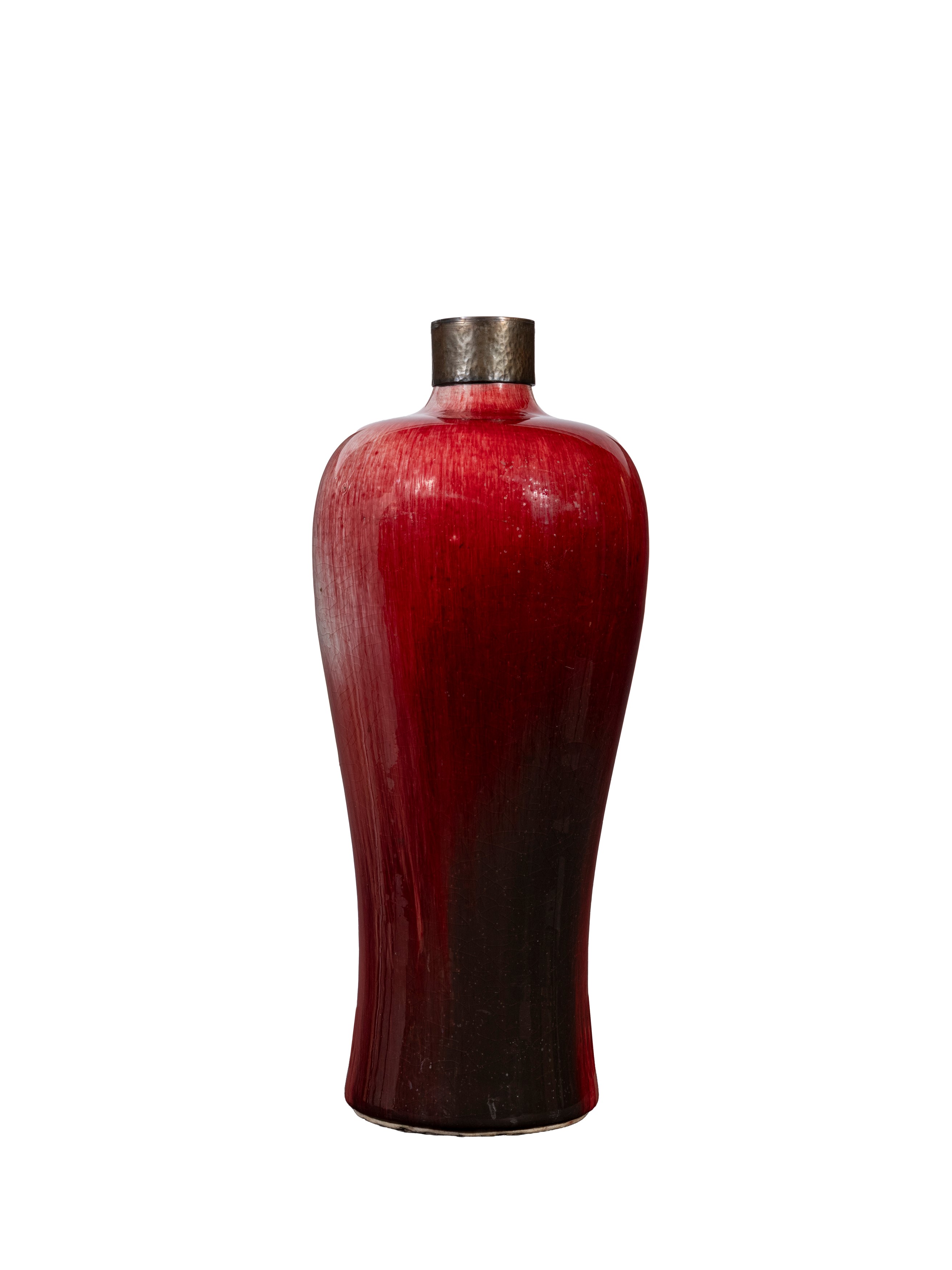
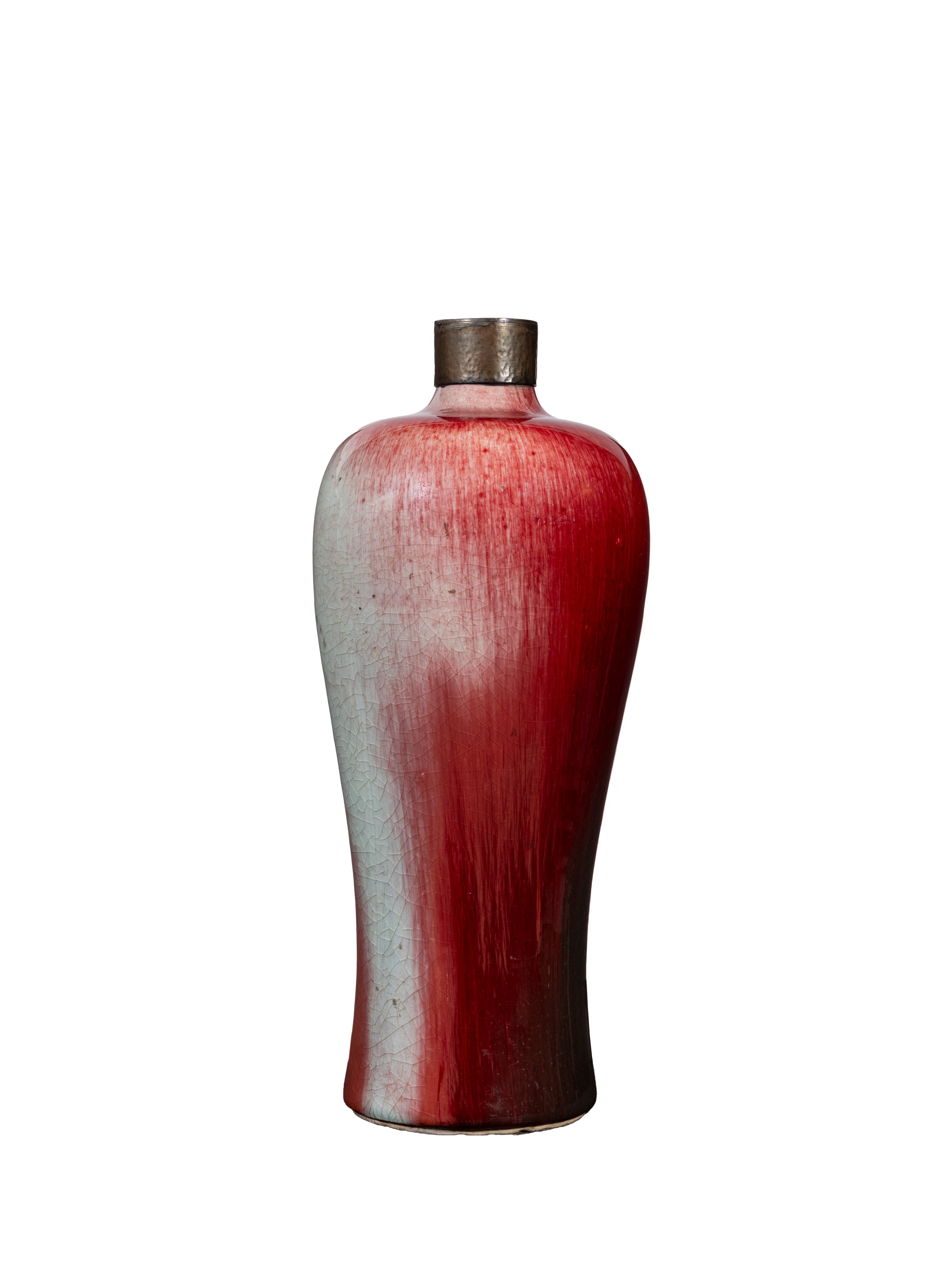
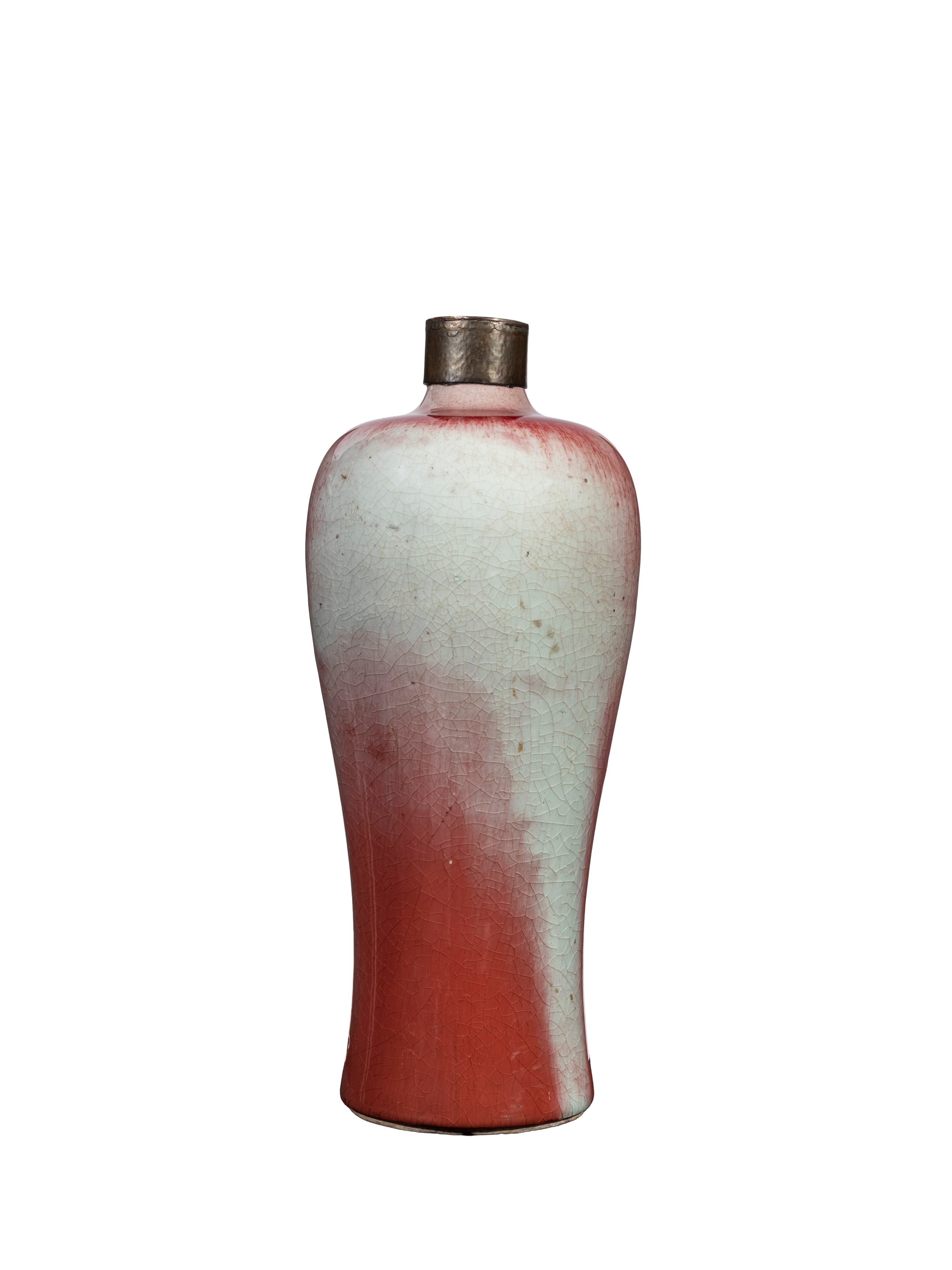
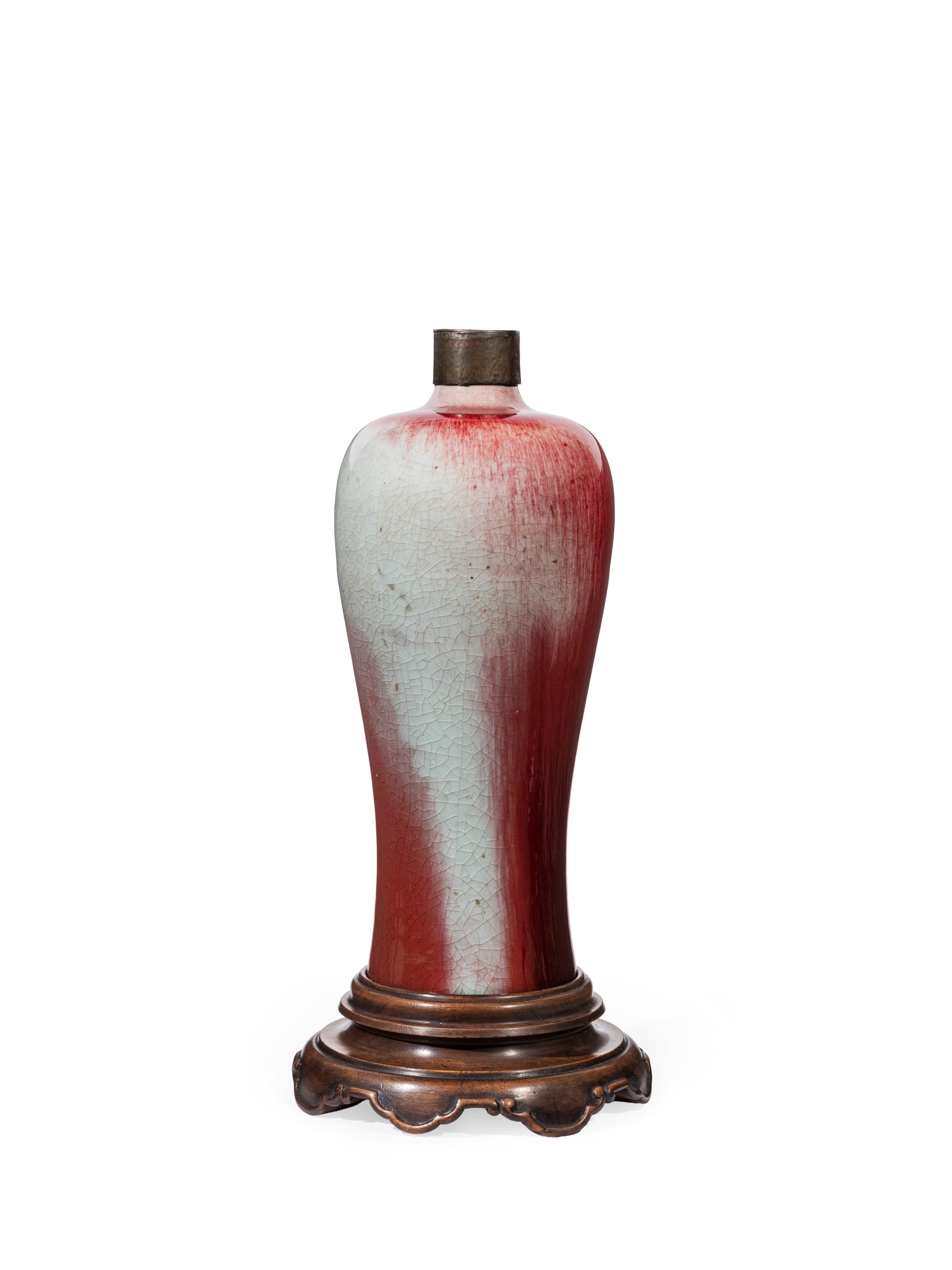
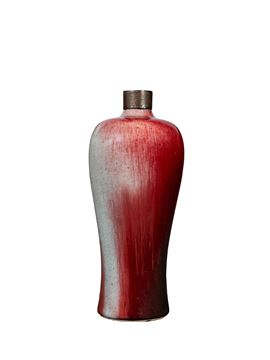
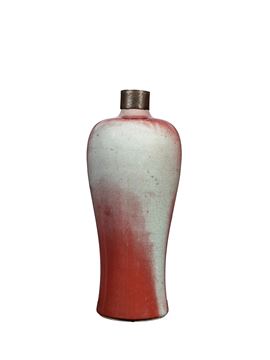
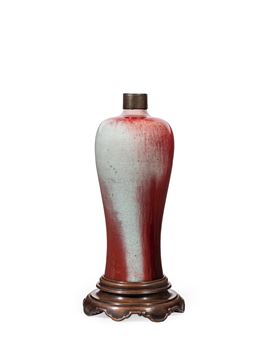
A RARE COPPER-RED-GLAZED 'LANGYAO' PORCELAIN MEIPING, China, Qing dynasty, Kangxi period (1661-1722)
h cm 38
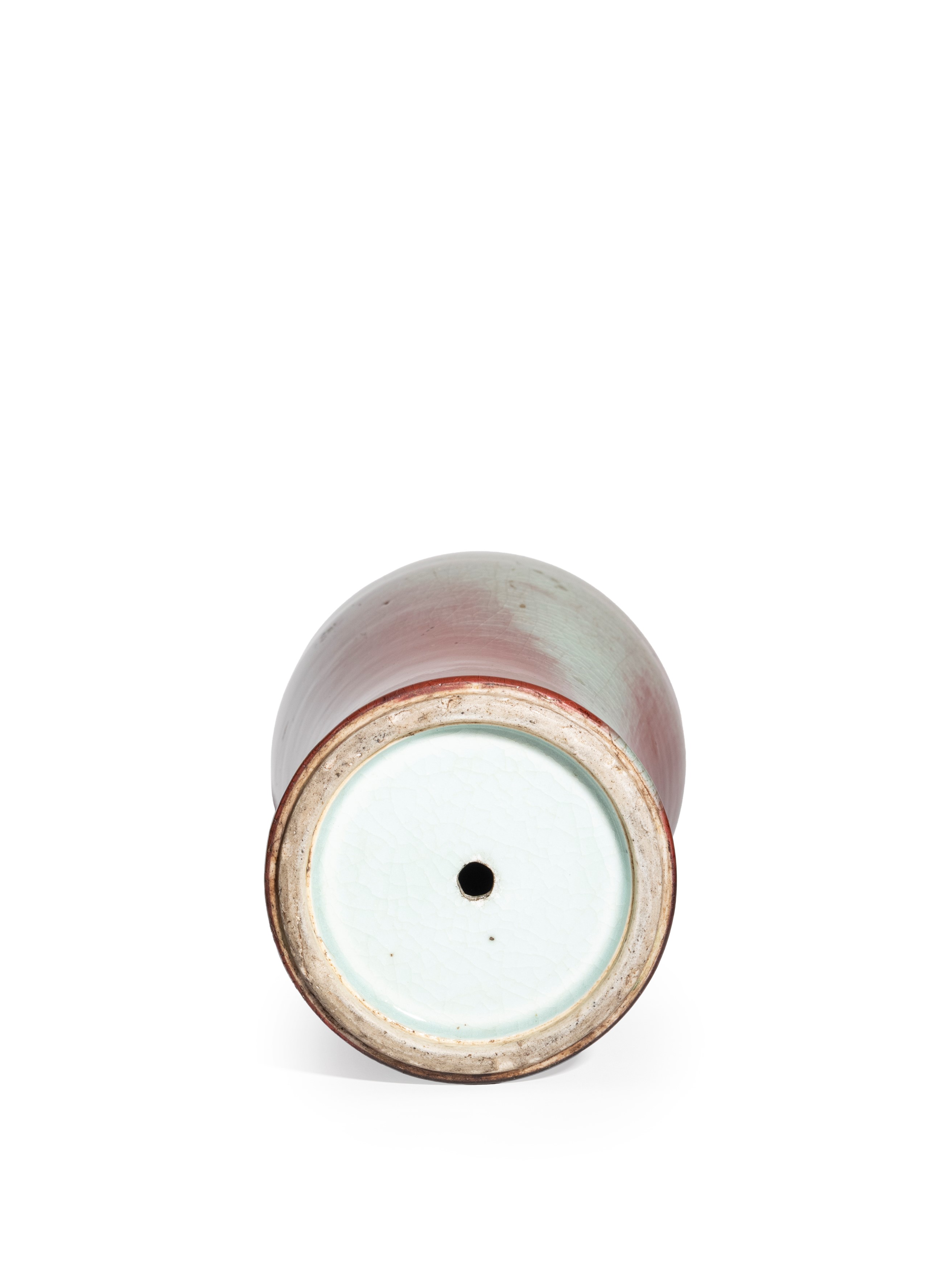
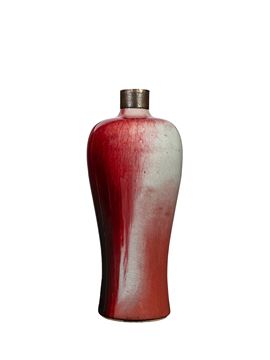
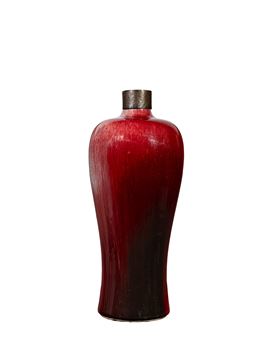
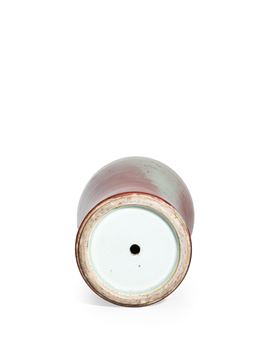
The sinuous form is covered in a crackle glaze of intense raspberry-red, gently fading to a bluish-grey tone over part of the body; the base is covered in a pale crackle glaze.
清康熙 郎窑红梅瓶
Catalogue Notes:
Although copper-red glazes were first developed at Jingdezhen during the Yuan dynasty, in the fourteenth century, their use was largely abandoned during the fifteenth century due to the difficulty of controlling this particularly unstable pigment. It was only under the reign of the Kangxi Emperor (1662–1722) that artisans resumed experimenting with the sought-after glazing effects that copper red could produce. The langyao glaze was reworked under the supervision of Lang Tingji (1663–1715), superintendent of the imperial kilns at Jingdezhen from 1705 to 1712, whose name is believed to have given rise to the term. Under his direction, imperial potters sought to recreate the lost formula of the early Ming period, perfecting the production of deep copper-red glazes. They also manipulated the glaze to achieve the delicate mottled effects seen on peachbloom porcelains.
See the langyao vase with similar colour gradations in the collection of the National Gallery of Art, Washington, D.C., inventory no. 1942.9.527 (link).
Kangxi-period langyao meiping are extremely rare. In this regard, see the smaller example in the collection of the Metropolitan Museum of Art, New York, inventory no. 14.40.70 (link). See also the smaller langyao meiping sold at Sotheby’s, Art d’Asie, 12 June 2025, lot 149 (link).
Kangxi-period langyao meiping are extremely rare. In this regard, see the smaller example in the collection of the Metropolitan Museum of Art, New York, inventory no. 14.40.70 (link). See also the smaller langyao meiping sold at Sotheby’s, Art d’Asie, 12 June 2025, lot 149 (link).
清康熙 郎窑红梅瓶
€ 500,00 / 700,00
Estimate
€ 500,00
Starting price