
130
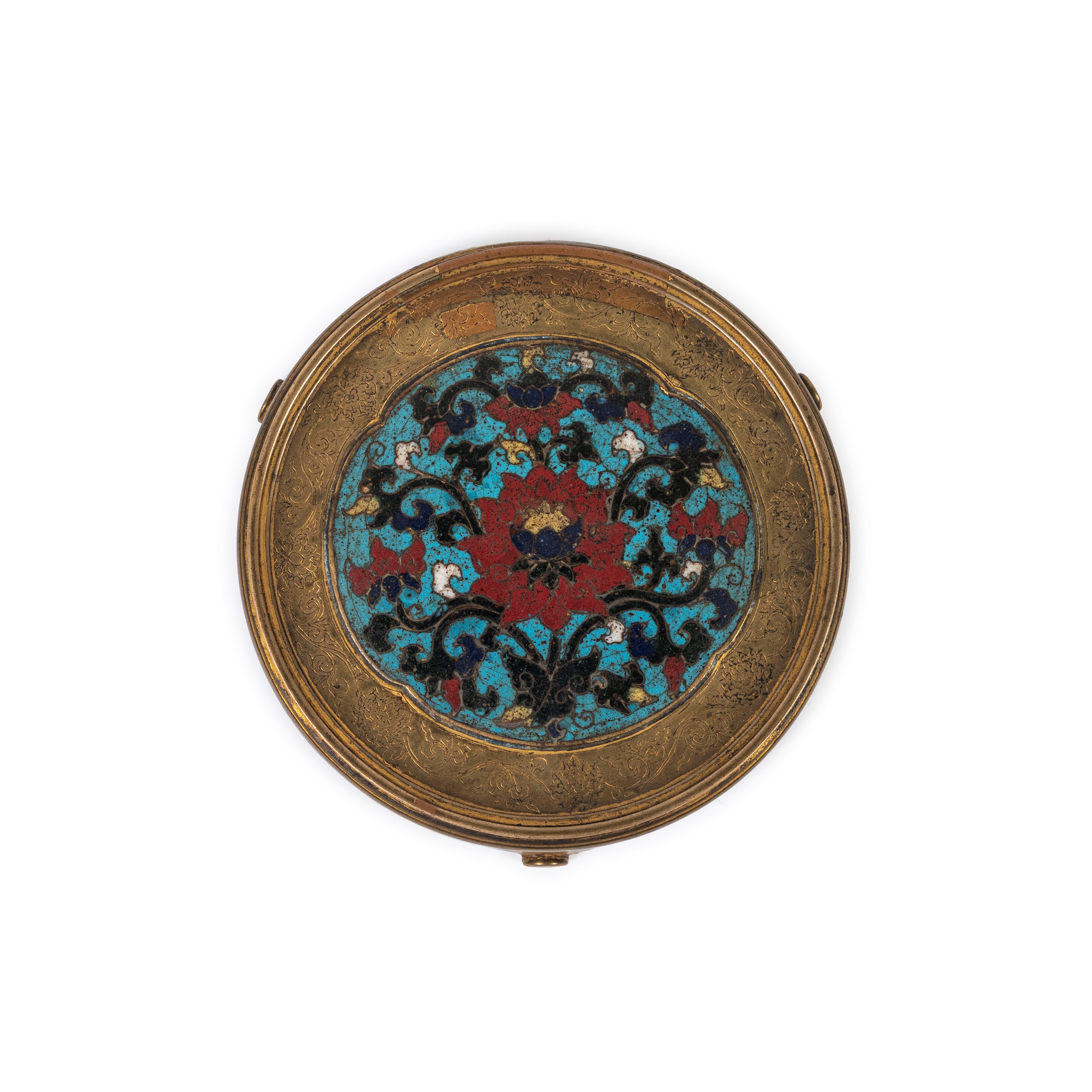
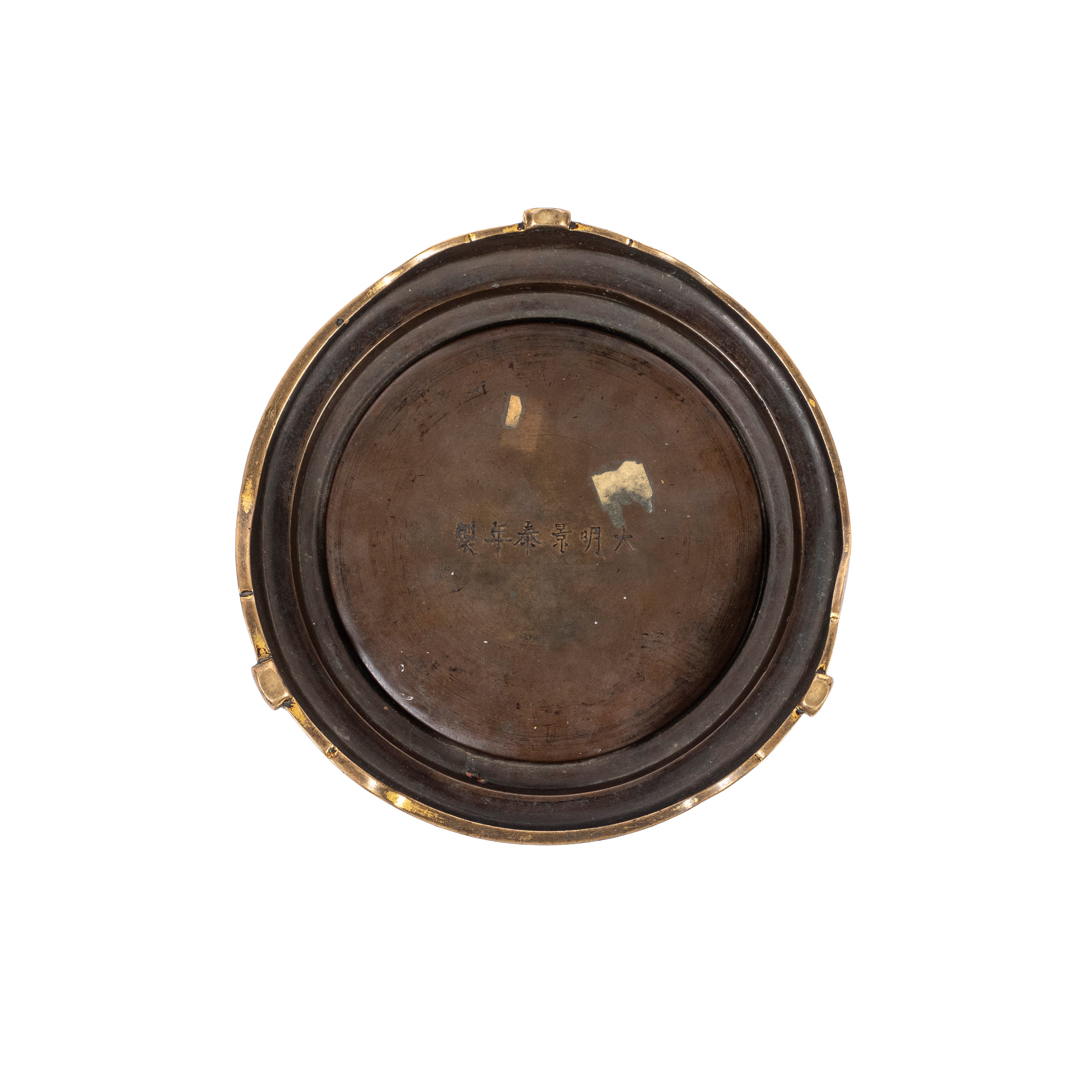
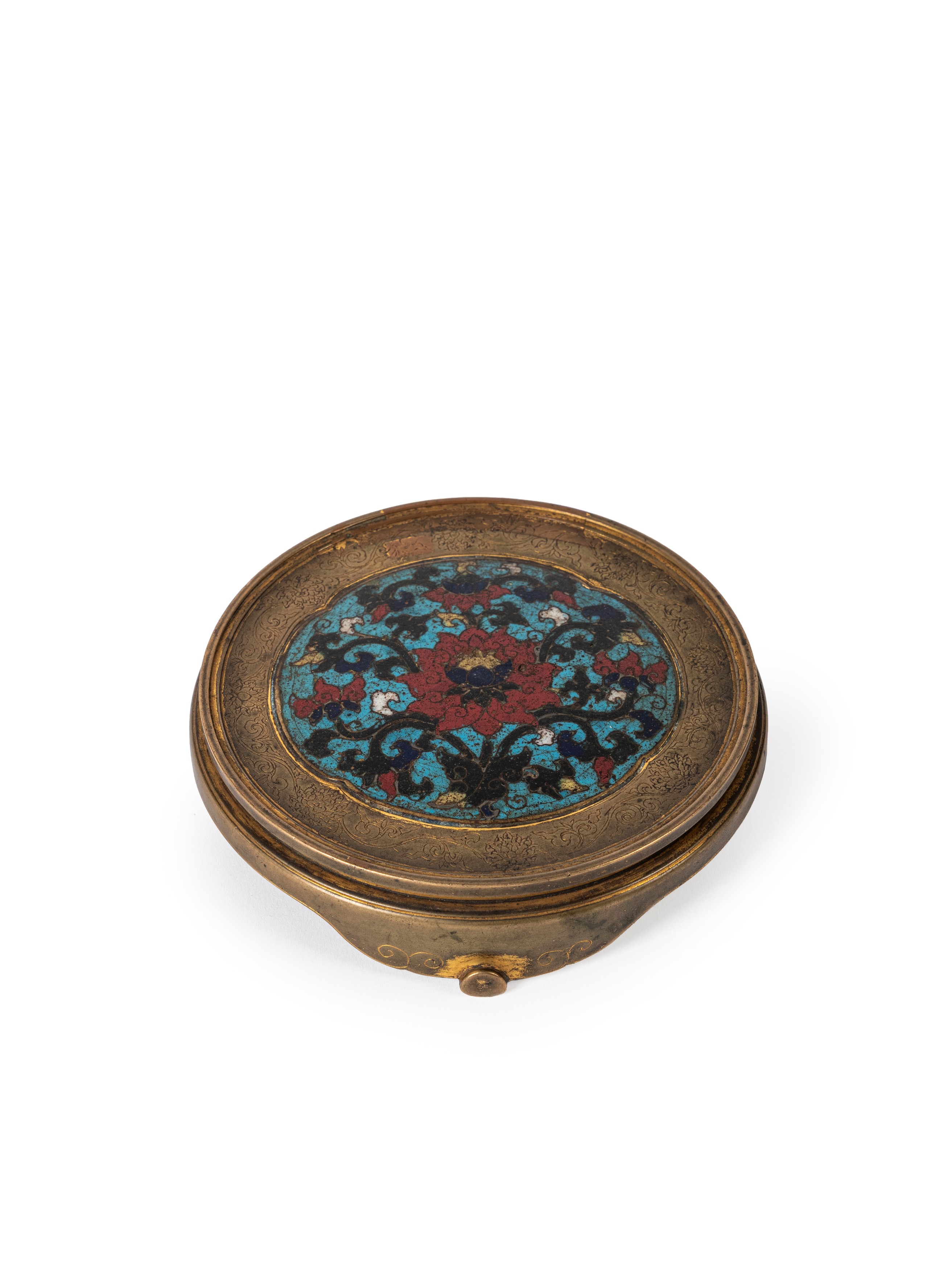
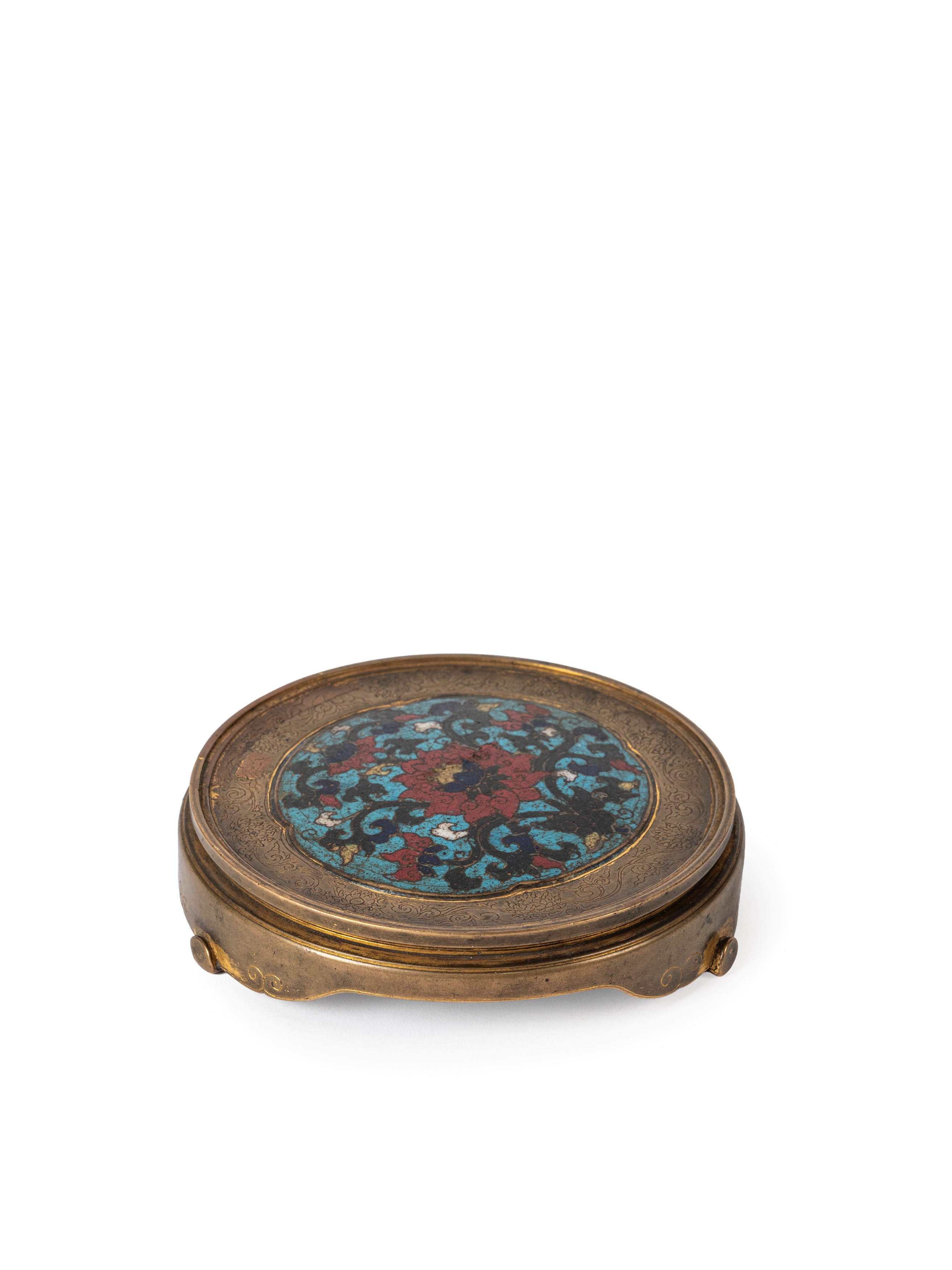
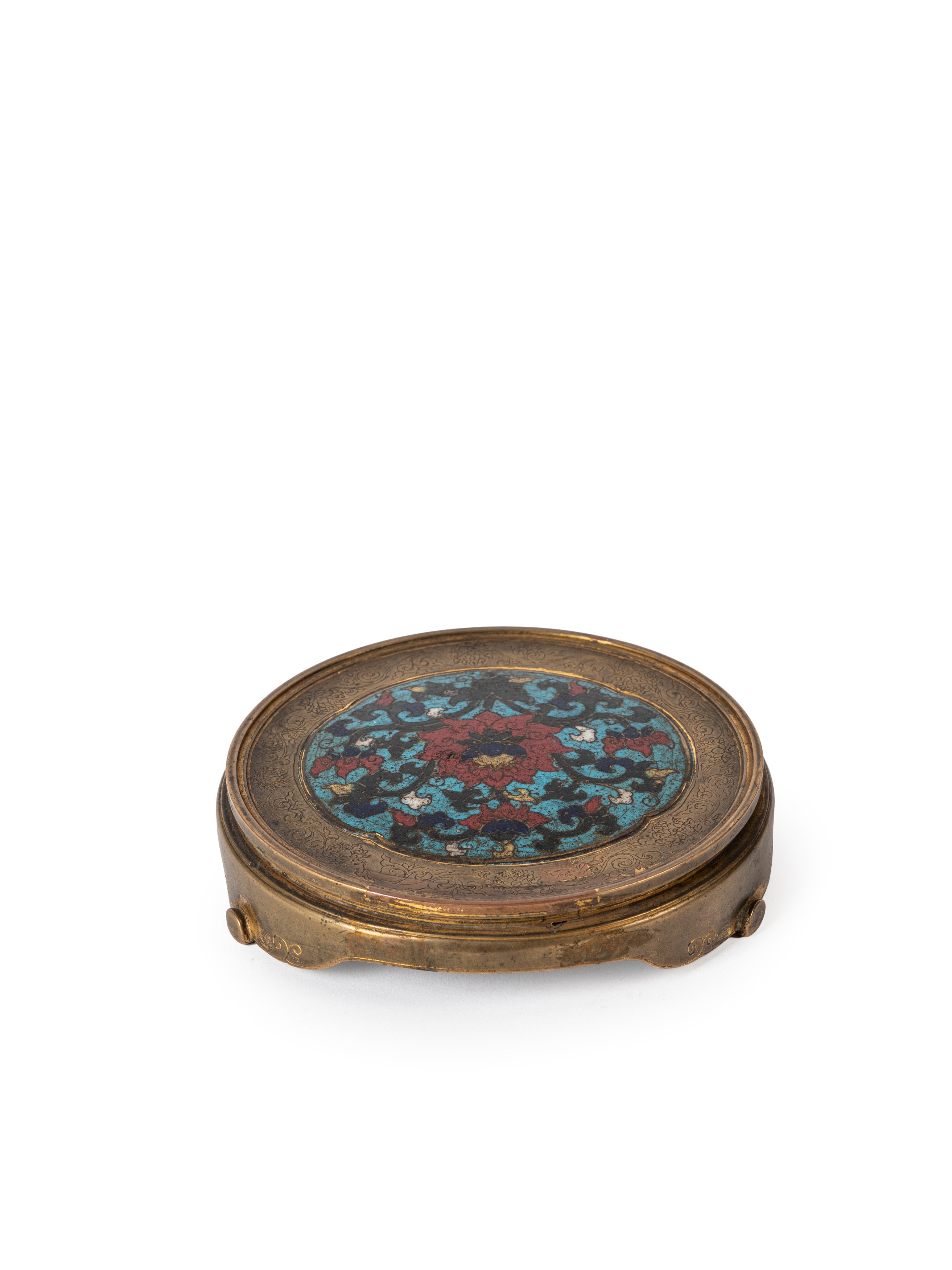
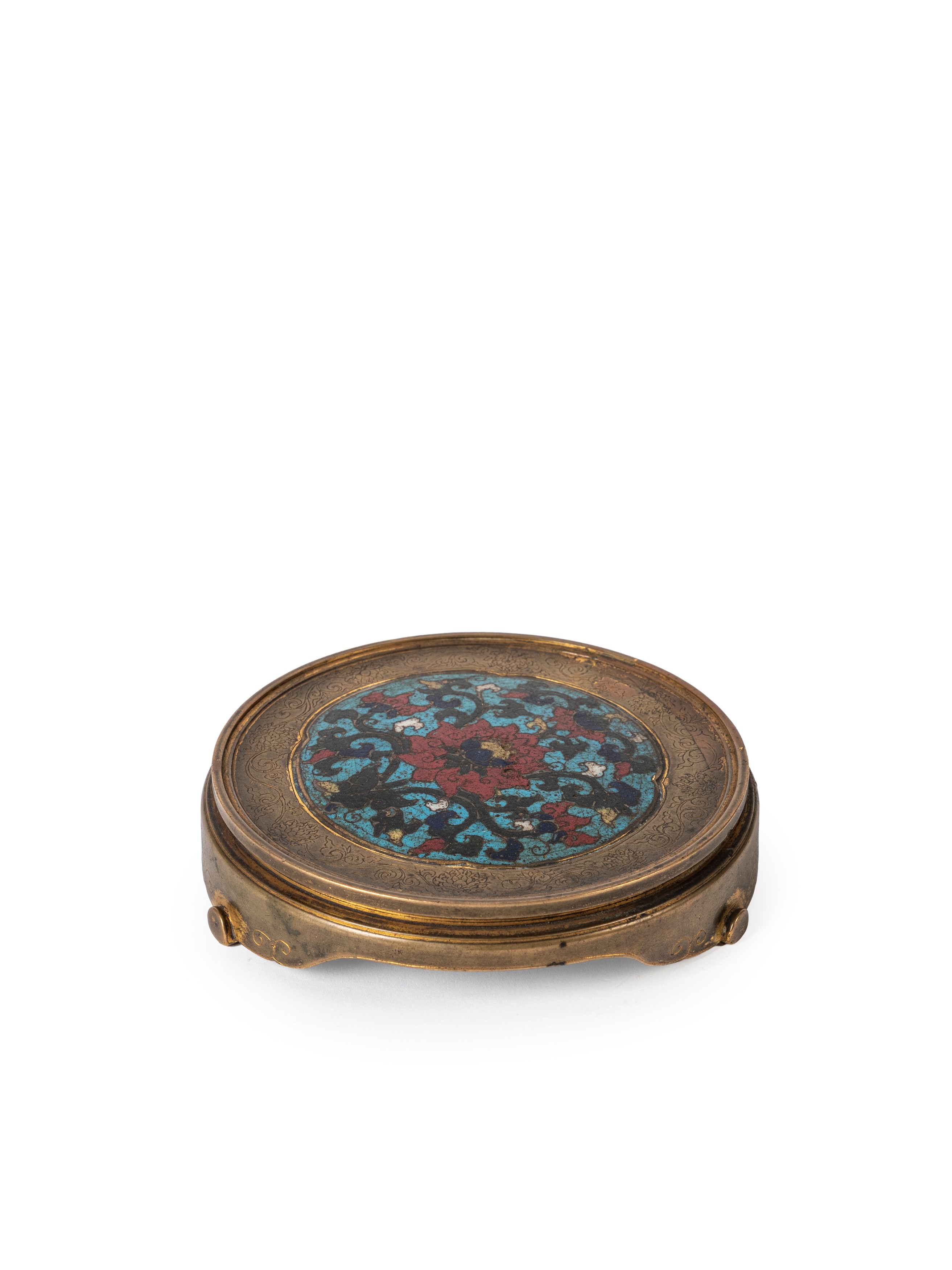
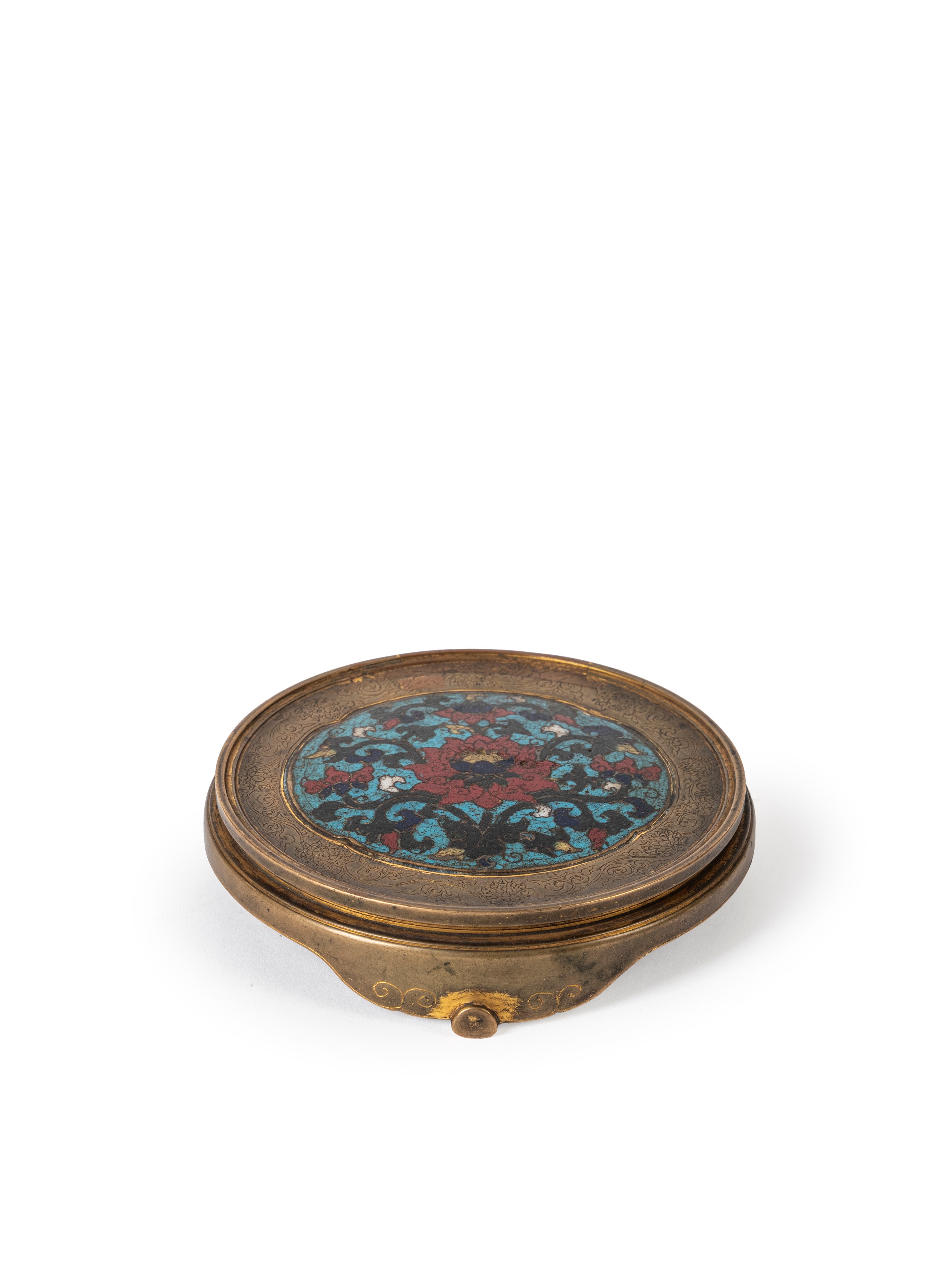
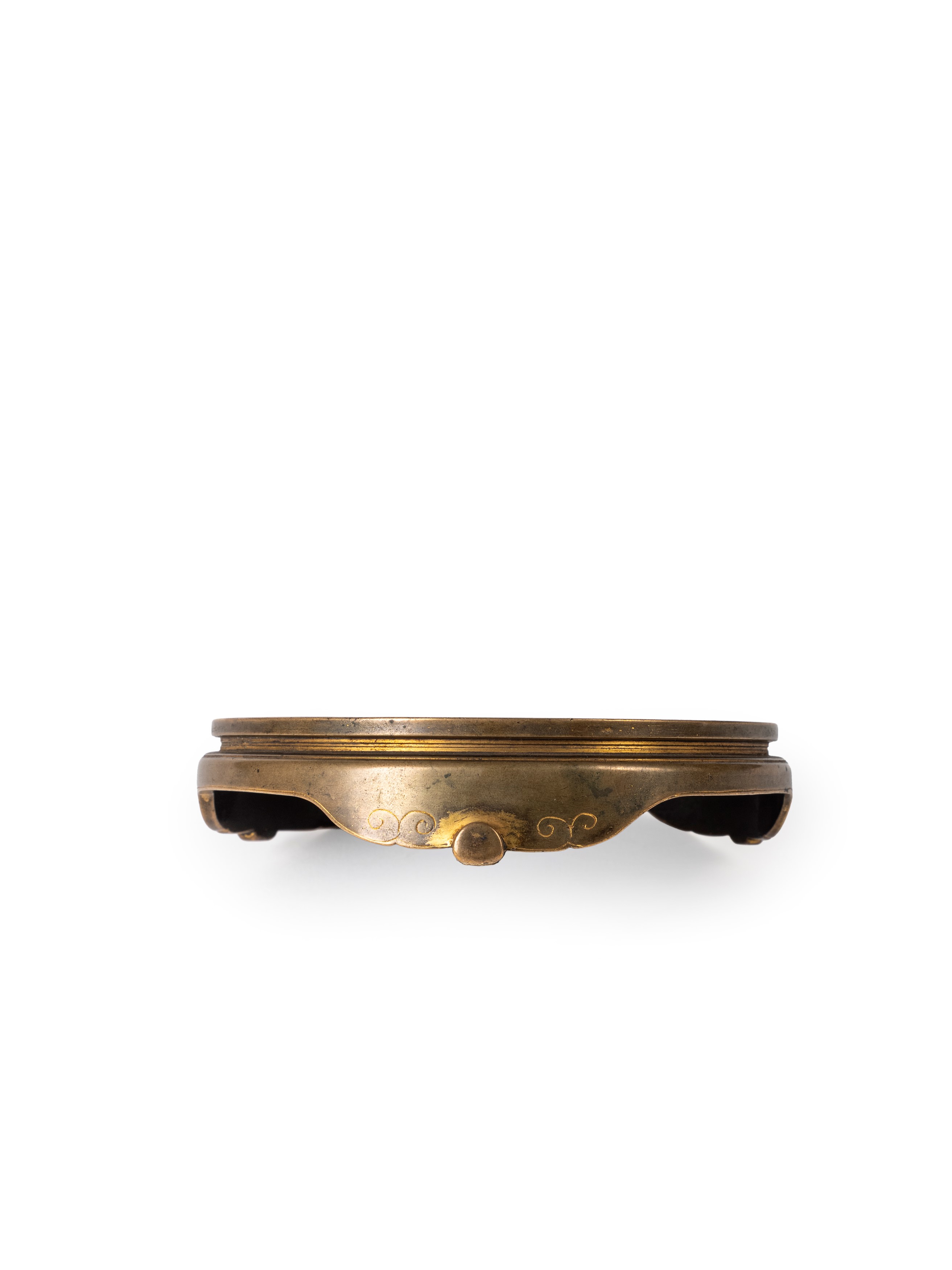
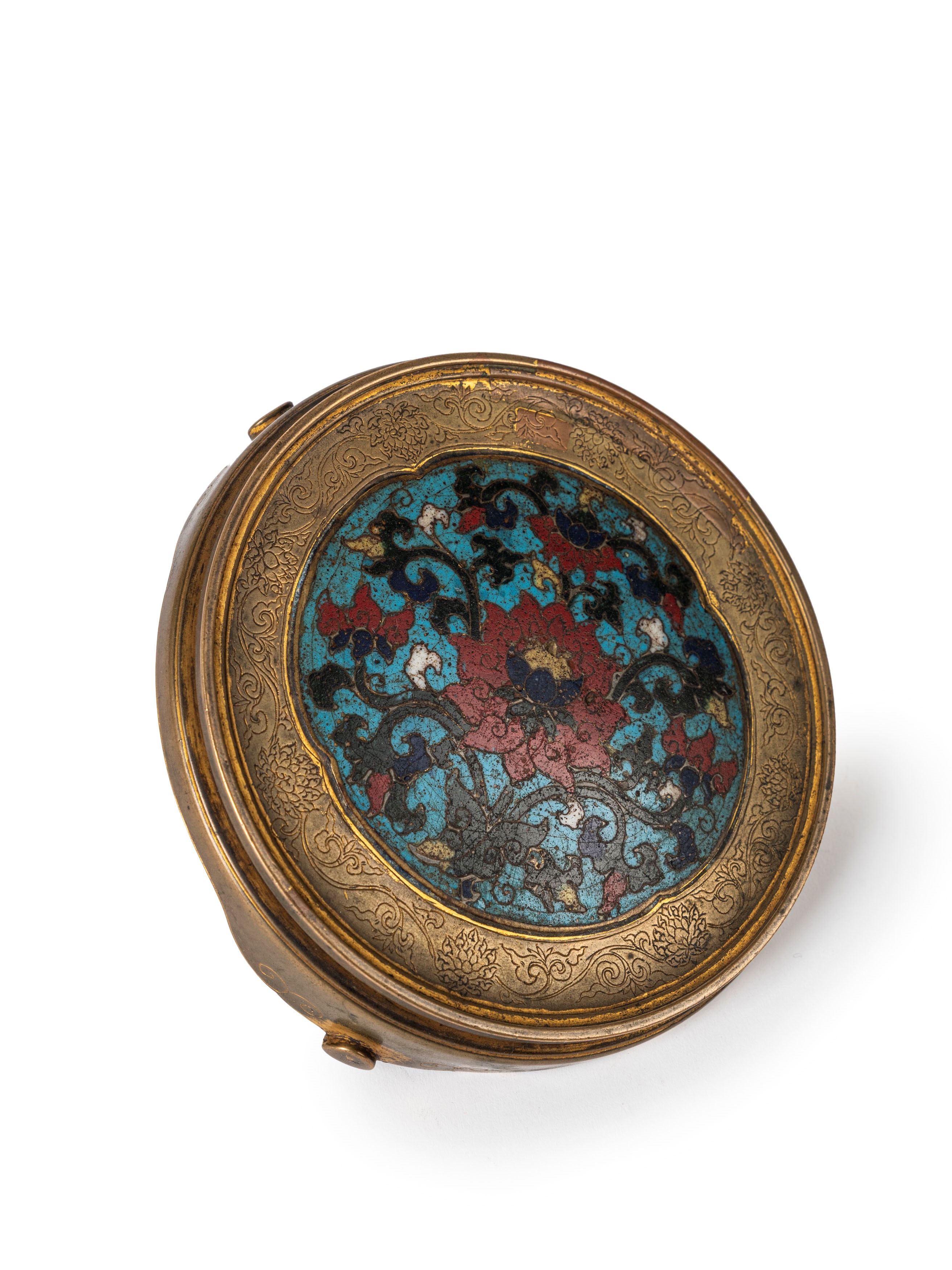
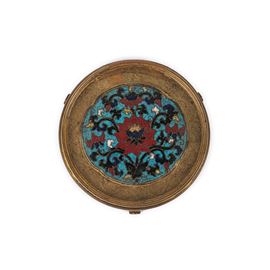
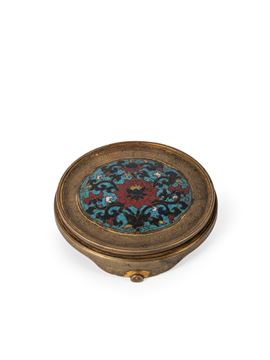
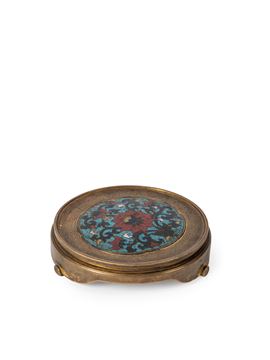
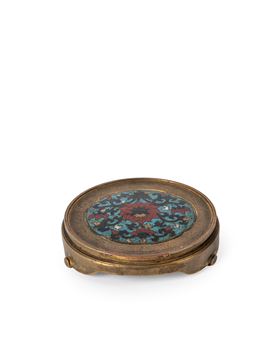
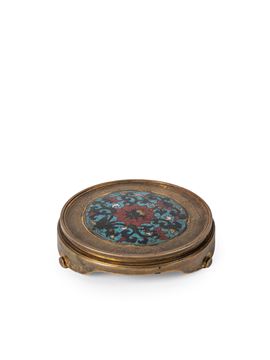
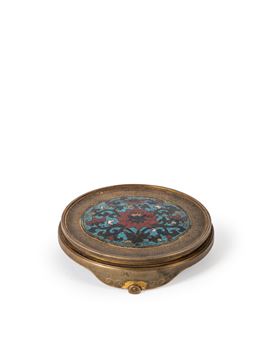
A RARE IMPERIAL GILT-BRONZE CLOISONNÉ 'LOTUS' STAND, China, early Ming dynasty, late 14th/early 15th c.
d cm 14,5
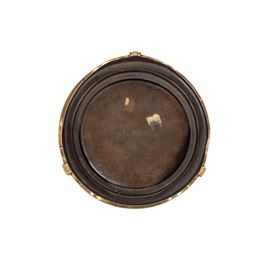
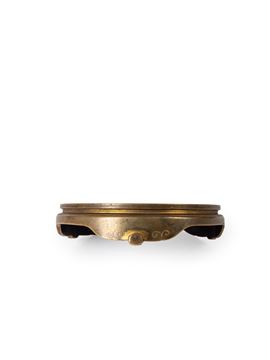
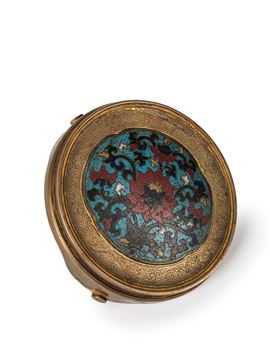
Standing on three small ruyi-shaped feet, the rim of the stand consists of a finely chased band decorated with lotus scrolls, enclosing a rich and powerful cloisonné enamel decoration on an intense turquoise ground, with a central lotus flower surrounded by polychrome leaves and buds. The base bears an apocryphal six-character Jingtai Emperor mark, incised at the centre.
明早期 14/15世纪 “大明景泰年制”款铜鎏金掐丝珐琅缠枝莲纹底座
此件器物立于三个如意形足上,边缘饰以精雕细琢的莲花纹饰带,内嵌浓郁华丽的掐丝珐琅,底色为深邃的绿松石色,中央莲花周围环绕着色彩斑斓的莲叶和花苞。底部中央镌刻有“大明景泰年制”六字款识。
类似的錾刻风格可参见北京故宫博物院藏三脚香炉,该香炉见《故宫博物院藏珍品全集——金属胎珐琅器》,2008年,香港,第16页,图14。另可参见伦敦大英博物馆藏宣德时期昆提卡,其装饰和錾刻风格与本例相似,藏品编号1977,0718.1(链接)。值得注意的是,这种装饰技法在清代被重新运用,用于装饰宫廷器物。当时,古代重要的掐丝珐琅元素被重新用于青铜或铜质底座,再进行錾刻和鎏金处理。许多十四世纪末至十五世纪初的掐丝珐琅器都曾以这种方式被重复利用,例如现藏于北京故宫博物院的清代宫廷藏品,详见《故宫博物院藏珍品全集——金属胎珐琅器》,2008年,香港,第2-16页,图1-14;第17-18页,图15-16。
Catalogue Notes:
It can be reasonably assumed that the present stand was intended to support a tripod incense burner or a vase, both possibly intended for ritual use. The exceptional quality of the cloisonné work, the harmonious design of the lotus flower and foliage, and the presence of chased elements are consistent with an early Ming dynasty dating.
See a fourteenth-century tripod incense burner, featuring the same style of chasing and cloisonné decoration with lotus scrolls, flowers and leaves similar to those on the present stand, in the collection of the National Palace Museum, Taiwan, inventory no. 故琺001004N000000000, exhibited in the exhibition 'The Mystery of the Jingtai Cloisonné Unveiled' (link).
According to studies on the stylistic development of floral motifs, the lotus flower composition on the present stand fully embodies the characteristics typical of the period up to the first half of the fifteenth century, as illustrated in Helmut Brinker and Albert Lutz 1989, Chinese Cloisonné: The Pierre Uldry Collection, London, p. 59, fig. 34, a, b and c. Indeed, it closely corresponds to the flowers on two mandala stands: one in the collection of the Cleveland Museum of Art, inventory no. 1987.58 (link), and the other in the Freer Gallery of Art, Washington, D.C., inventory no. F1998.295 (link), both dating to the early fifteenth century. See also the tripod incense burner in the collection of the Palace Museum, Beijing, dated to the early Ming dynasty and illustrated in Classic of the Forbidden City – Enamels in the Collection of the Palace Museum, 2011, Beijing, p. 32, pl. 15.
The presence of colours that blend within the same cell – yellow and green, red and green, blue and green – is also typical of the early Ming period. Likewise, the composition of the enamels is consistent with a six-colour palette in use up to the Xuande reign: intense turquoise for the ground, red, yellow, dark blue, white and dark green. In particular, the first five colours are opaque, whereas the dark green is a transparent glaze, consistent with early Ming enamels[1]. This may be mistaken for a black glaze, a distinctive characteristic of this period. Also typical are the rather subdued red and the blue, which tends towards a purplish hue[2].
For a similar style of chasing, see also a tripod incense burner in the collection of the Palace Museum, Beijing, illustrated in The Complete Collection of Treasures of the Palace Museum – Metal-bodied Enamel Ware, 2008, Hong Kong, p. 16, no. 14. See also an Xuande-period kundika, with decoration and chasing similar to the present example, in the collection of the British Museum, London, inventory no. 1977,0718.1 (link). It should be noted that this decorative technique was subsequently revived during the Qing dynasty to embellish objects intended for the Imperial Court, when ancient and important cloisonné elements were reused in bronze or copper mounts, which were then chased and gilded. Numerous examples of cloisonné dating from the late fourteenth to the early fifteenth century were reused in this way, as can be seen in many objects from the Qing Court Collection now in the Palace Museum, Beijing, illustrated in The Complete Collection of Treasures of the Palace Museum – Metal-bodied Enamel Ware, 2008, Hong Kong, pp. 2–16, nos. 1–14; pp. 17–18, nos. 15–16.
Finally, the presence of the Jingtai mark – the most commonly found mark on Chinese cloisonné – applied by incision strongly suggests that the body was cast during the same period in which the enamels were applied, while the mark itself was added only at a later date. This was a common practice, particularly between the Kangxi and Qianlong reigns, when such marks were predominantly applied to pieces produced between the fourteenth and fifteenth centuries, although it is relatively rare to find the mark incised along a horizontal line[3]. See a vase illustrated in Garner, 1970, pl. 18, dating to the first half of the fifteenth century and likewise bearing an incised Jingtai mark, which, according to the author, was probably added during the Qianlong reign. See also the vase illustrated in Soame Jenyns and William Watson 1980, Chinese Art II – Gold-Silver-Later Bronzes-Cantonese Enamel-Lacquer-Furniture-Wood, New York, pl. 73, which closely resembles the present stand in the style of its flowers, foliage and colour palette. The authors maintain that its base was certainly reattached at a later date.
[1] Beatrice Quette, 2011, Cloisonné – Chinese Enamels from the Yuan, Ming and Qing Dynasties, London, pp. 8–12, 33.
[2] Harry Garner, 1970, Chinese and Japanese Cloisonné Enamels, London, pp. 51, 53.
[3] Quette, 2011, pp. 20–39, 33; Garner, 1970, pp. 62–63.
明早期 14/15世纪 “大明景泰年制”款铜鎏金掐丝珐琅缠枝莲纹底座
此件器物立于三个如意形足上,边缘饰以精雕细琢的莲花纹饰带,内嵌浓郁华丽的掐丝珐琅,底色为深邃的绿松石色,中央莲花周围环绕着色彩斑斓的莲叶和花苞。底部中央镌刻有“大明景泰年制”六字款识。
图录注释:
可以合理推断,此件器物原本用于支撑三脚香炉或花瓶,二者可能均用于祭祀仪式。其掐丝珐琅工艺精湛,莲花与莲叶的构图和谐统一,且有錾刻纹饰,均符合明代早期器物的年代特征。
台湾故宫博物院藏有一件十四世纪的三脚香炉,其錾刻和掐丝珐琅装饰风格与此件香炉相似,饰以莲花纹、花卉和叶片图案,编号为“故宫001004N000000000”,曾于“揭秘景台珐琅”展览中展出(链接)。
根据对花卉纹样风格发展的研究,此件香炉上的莲花图案充分体现了十五世纪上半叶之前的典型特征,详见Helmut Brinker和Albert Lutz合著的《中国掐丝珐琅:皮埃尔·乌尔德里藏品》(伦敦,1989年),第59页,图34a、b和c。事实上,它与两件曼荼罗底座上的花卉图案极为相似:一件藏于克利夫兰艺术博物馆,藏品编号1987.58(链接);另一件藏于华盛顿特区弗利尔美术馆,藏品编号F1998.295(链接),两件均可追溯至十五世纪早期。另见北京故宫博物院藏的一件明代早期三脚香炉,该香炉的图版收录于《故宫博物院藏珐琅彩》(2011年,北京),第32页,图版15。
同一色块内色彩的融合——例如黄绿、红绿、蓝绿——也是明代早期珐琅彩的典型特征。同样,珐琅彩的配色也符合宣德年间使用的六色调:底色为浓郁的青绿色,其余部分依次为红色、黄色、深蓝色、白色和深绿色。具体来说,前五种颜色是不透明的,而深绿色则是透明釉,属于明代早期珐琅彩[1]。这种透明釉容易被误认为是黑釉,而黑釉正是这一时期珐琅彩的典型特征。此外,较为柔和的红色和略带紫色调的蓝色[2]也具有代表性。
类似的錾刻风格可参见北京故宫博物院藏三脚香炉,该香炉见《故宫博物院藏珍品全集——金属胎珐琅器》,2008年,香港,第16页,图14。另可参见伦敦大英博物馆藏宣德时期昆提卡,其装饰和錾刻风格与本例相似,藏品编号1977,0718.1(链接)。值得注意的是,这种装饰技法在清代被重新运用,用于装饰宫廷器物。当时,古代重要的掐丝珐琅元素被重新用于青铜或铜质底座,再进行錾刻和鎏金处理。许多十四世纪末至十五世纪初的掐丝珐琅器都曾以这种方式被重复利用,例如现藏于北京故宫博物院的清代宫廷藏品,详见《故宫博物院藏珍品全集——金属胎珐琅器》,2008年,香港,第2-16页,图1-14;第17-18页,图15-16。
最后,器物上刻有景泰款——中国掐丝珐琅器上最常见的款识——这一特征强烈表明,胎体与珐琅彩绘于同一时期铸造,而款识本身则是后加的。这种做法十分常见,尤其是在康熙至乾隆年间,此类款识主要出现在十四至十五世纪的器物上,但沿水平线刻款的情况相对少见[3]。例如,Garner (1970) 出版的图版 18 中展示了一件十五世纪上半叶的花瓶,其上同样刻有“景泰”款识,据作者推测,该款识很可能是在乾隆时期添加的。另见 Soame Jenyns 和 William Watson (1980) 合著的《中国艺术 II – 金银器、后期青铜器、粤式珐琅漆器、家具、木器》(纽约)图版 73 中展示的一件花瓶,其花卉、枝叶和色彩风格与本件展品极为相似。作者认为,其底座显然是后世重新安装的。
[1] Beatrice Quette,2011,《景泰蓝——元、明、清时期的中国珐琅彩》,伦敦,第8-12页、第33页。
[2] Harry Garner,1970,《中国和日本景泰蓝》,伦敦,第51页、第53页。
[3] Quette,2011,第20-39页、第33页;Garner,1970,第62-63页。
€ 4.000,00 / 6.000,00
Estimate
€ 4.000,00
Starting price